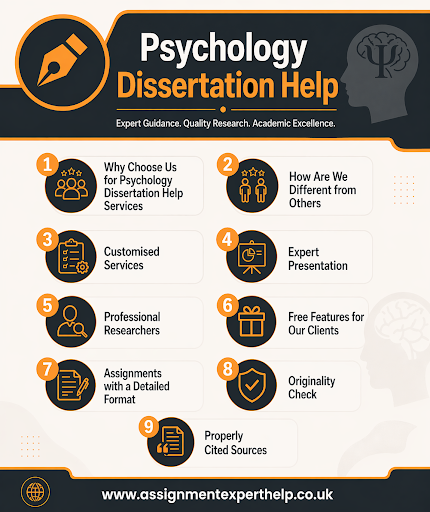
A psychology dissertation offers students an opportunity to engage in research that is valuable and meaningful. This offers students a way to provide a contribution to their field of study and an important step in the completion of their degree. The foundation of a successful dissertation is the data collection, data analysis, and the drawing of conclusions. The collection, analysis, and conclusion of data allow students the opportunity to develop skills that will aid them in the progression of their career, both professionally and academically, and answer their theses.
Data collection and analysis, however, is a difficult stage of the dissertation for many psychology students. This stage of the dissertation requires the employment of research design, data collection, participant recruitment, and data organization and analysis, and intersectional and personal time management. Because of the enormity of this stage, many students decide to utilize psychology dissertation help as an educational resource that aids in research design, data collection and analysis, and dissertation writing while preserving the integrity of their research.
Data Collection in Psychology Research
Psychological research is the study of human behavior and thus relies heavily on the collection of data. Without the collection of data, the theories of psychology remain unproven and the discipline of psychology remains stagnant.
A psychology dissertation offers students the opportunity to:
- Formulate their aims
- Select their subjects
- Perform collection of data
- Structure their data
- Perform analysis
- Draw conclusions
Each of these components is fundamental to the integrity and accuracy of research.
Dissertation Methodology
Of all the decisions that a student will make in the dissertation process, the choice of methodology is likely the most significant.
Students use:
- Quantitative research
- Qualitative research
- Mixed methods research
- Experimental research
- Case studies
- Surveys
- Interviews
- Observational studies
Each methodology is selected based on the research objectives and the type of data required.
Data Gathering Techniques
The aim of research dictates the technique employed to gather the most reliable data.
Psychology studies commonly use:
- Questionnaires
- Interviews
- Observations
- Tests
- Participation in experiments
Each technique has its own advantages depending on the research design.
Data Gathering Problems
Data gathering can be a real challenge for many psychology students.
The most common problems encountered are:
- Inadequate participants
- Poor questionnaires
- Inadequate responses
- Ethical issues
- Data organization
- Meeting deadlines
The quality of research can be improved and these problems reduced through careful preparation and planning.
Data Analysis
Data must be analyzed to address research questions. Analysis enables students to identify patterns, compare results, test hypotheses, and draw conclusions regarding psychological theories.
Thorough analysis helps ensure the validity and reliability of the dissertation.
Data Analysis Techniques
The analysis technique depends on the type of research conducted.
Psychology students commonly apply:
- Statistical analysis
- Thematic analysis
- Content analysis
- Comparative analysis
- Correlation analysis
- Descriptive analysis
Selecting the appropriate analytical technique improves the accuracy of research findings.
Psychology Dissertation Research Methodology Support
Professional Psychology Dissertation Support offers research and methodology guidance throughout the dissertation process while ensuring students retain ownership of their work.
Academic guidance may include:
- Assistance with choosing a topic
- Research planning
- Literature review guidance
- Clarification of research methods
- Help organizing data
- Constructive feedback
- Citation assistance
- Editing and proofreading
These services are designed to enhance research quality while maintaining the student’s originality.
Developing Research Skills
The research skills gained during dissertation writing are transferable and valuable throughout a student’s professional career.
Students learn to:
- Find and use peer-reviewed psychology research
- Assess the quality and relevance of research
- Formulate clear research questions
- Organize research effectively
- Evaluate research findings
- Develop evidence-based conclusions
These skills are valuable for careers in psychology, counseling, healthcare, education, and research.
Academic Writing Skills
Even the best research has little value if it is not presented clearly.
Students improve their ability in:
- Grammar and syntax
- Academic vocabulary
- Organizing research and ideas
- Logical flow
- Argument development
- Editing and proofreading
Strong academic writing allows complex psychological concepts to be communicated clearly and professionally.
Understanding Referencing Standards
Academic honesty requires giving proper credit to previous researchers.
Students commonly use:
- APA
- Harvard
- MLA
- Chicago
Learning these referencing styles enables students to cite psychology journals, books, and research articles correctly while reducing the risk of plagiarism.
Balancing Research and Other Academic Obligations
Psychology students often complete dissertation research while attending lectures, coursework, internships, and other academic responsibilities.
Good planning helps students:
- Create realistic research plans
- Set research milestones
- Organize research materials
- Monitor research progress
- Meet university deadlines
Effective planning improves research quality and reduces academic stress.
The Importance of Dissertation Assistance
Writing a psychology dissertation involves completing many complex academic tasks independently.
Responsible Dissertation Help supports students by helping them:
- Understand research requirements
- Improve academic writing
- Strengthen critical thinking
- Organize research effectively
- Enhance analytical skills
- Present findings professionally
Ethical academic guidance promotes independent learning while improving research quality.
Choosing Reliable Academic Support
Students should select academic support that focuses on education and skill development.
Reliable guidance should include:
- Experienced academic professionals
- Psychology research specialists
- Ethical academic practices
- Constructive feedback
- Clear communication
- Knowledge of university standards
- Citation and formatting assistance
The primary goal should always be improving students’ research and writing abilities.
Upholding Academic Integrity
Academic honesty should remain a priority throughout every stage of the dissertation.
Psychology Dissertation Help should be used responsibly for:
- Research guidance
- Methodology clarification
- Draft feedback
- Editing and proofreading
- Citation support
- Formatting assistance
Every dissertation submitted should remain the student’s own original research and writing.
Conclusion
Psychology Dissertation Help can support students in collecting research data, analyzing findings, and presenting their work professionally while maintaining academic integrity. When used ethically, dissertation help strengthens research quality, improves writing skills, encourages independent learning, and supports original academic work.
Developing strong research and academic writing skills also prepares psychology students to become confident professionals and active contributors to the field of psychological research.