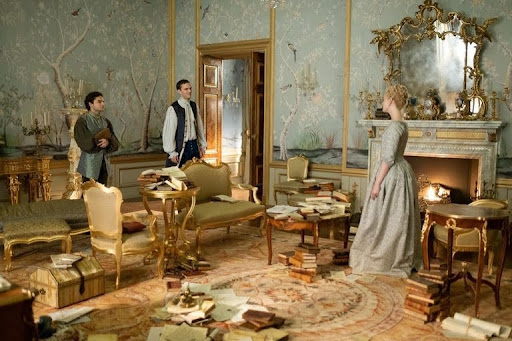
One of the biggest impressions that Catherine the Great made in the world is that she ruled Russia since the end of the eighteenth century. She has turned her nation into a great European power, though it was not only politics and war that she influenced. Her unique style in art, architecture, and interior design totally transformed the outlook of the Russian palaces. The furniture designed in the imperial court during her reign was of a fresh height of exquisiteness and artistry.
Prior to the accession of the throne by Catherine, Russian royal furniture was relying on the much ornamented and wavy Rococo style. Catherine changed this trend to one that is completely different. She was inclined toward the clean, straight, and classical proportions and Neoclassical movement. This change was a conscious decision to make her empire in line with the enlightened ideals of western Europe. Her furniture would be used as a strong representation of her intelligence and her vision of the future of the country.
The interpretation of the furniture of this era involves one taking a closer look at the styles that she advocated. You will be amazed by the way master craftsmen went to use rare materials to construct these wonderful things. You will also find out how her own tastes determined the general cultural identity of Russian decorative art in several generations to come.
Rise of Russian Neoclassicism
The change to the Neoclassical style in Russia occurred at a very fast pace during the reign of Catherine the Great. She desired her palaces to show the rationality, arrangement and perfection of ancient Greece and Rome. She strayed out of the heavy gilding and excessive curves which characterized the last period. Instead, she commissioned items that had straight legs, symmetrical designs and were obviously architectural.
This new fashion was exactly what she wanted to be regarded as being an enlightened ruler. The motifs in her time were also characterized by the use of the furniture such as urns, columns, and laurel wreaths. These archetypal signs were the symbols of stability and power. They were also very much appreciative of history and philosophy towards her. The letters with her major French philosophers tended to impact her artistic decisions and deliver the newest European concepts straight to the Russian court.
The resulting furniture was majestic without ever being disarrayed. The chairs, tables, and cabinets were also designed so that they fit in the rooms they were present in. Catherine even ordered suites of furniture to be made to suit the wall decorations and ceiling decorations of her newly constructed palace wings. This made the entire place one that was stunning and impressive to the visiting diplomats and foreign royalty. The neat sophistication of Russian Neoclassicism became the norm in the aristocratic houses throughout the empire in no time.
Exotic Woods and Materials
The change to the Neoclassical style in Russia occurred at a very fast pace during the reign of Catherine the Great. She desired her palaces to show the rationality, arrangement and perfection of ancient Greece and Rome. She strayed out of the heavy gilding and excessive curves which characterized the last period. Instead, she commissioned items that had straight legs, symmetrical designs and were obviously architectural.
This new fashion was exactly what she wanted to be regarded as being an enlightened ruler. The motifs in her time were also characterized by the use of the furniture such as urns, columns, and laurel wreaths. These archetypal signs were the symbols of stability and power. They were also very much appreciative of history and philosophy towards her. The letters with her major French philosophers tended to impact her artistic decisions and deliver the newest European concepts straight to the Russian court.
The resulting furniture was majestic without ever being disarrayed. The chairs, tables, and cabinets were also designed so that they fit in the rooms they were present in. Catherine even ordered suites of furniture to be made to suit the wall decorations and ceiling decorations of her newly constructed palace wings. This made the entire place one that was stunning and impressive to the visiting diplomats and foreign royalty. The neat sophistication of Russian Neoclassicism became the norm in the aristocratic houses throughout the empire in no time.
Bronze and Gilded Details
The lines of the pieces of furniture were quite plain but the ornamental details were breathtaking. The wooden surfaces were placed with gorgeous bronze mounts by craftsmen. The additions made out of these metals cushioned the weak edges of the furniture and gave it a glittering look. This bronze was frequently covered with a layer of thin gold, and this method is referred to as ormolu.
The gilded bronze mounts were normally in the form of classical elements. It may be little golden faces, or paws of animals, or wreaths of elaborate flowers around a mahogany cabinet. These gleaming details reflected the candle light in the rooms of the palace thus making the furniture look like magic indeed in an evening party. The harmony of the wooden material and the gold color turned out to be Catherine the royal style.
European Craftsmen in Russia
Catherine the Great Furniture was aware that she required the finest talent to come up with the best furniture. She was an active enticer of prominent architects and furniture manufacturers in the rest of Europe to do their work in St. Petersburg. David Roentgen was one of the most renowned craftsmen who she employed as a brilliant cabinetmaker of German descent. Roentgen was renowned in his mechanical furniture that had hidden drawers, secret compartments and music.
Catherine made enormous purchases of furniture with Roentgen. His works were acclaimed because of the perfect construction and genius engineering. One desk would have dozens of secret buttons and when they were pressed the various parts would spring open at the same time. The empress admired such ingenious, exquisite objects and had them in her most secret apartments at the Hermitage.
Catherine also contributed to the education of local artisans by inviting such masters to Russia as Roentgen. These European professionals had Russian apprentices who learnt the art of the modern day design and advanced techniques in woodworking. In the course of time, these local craftsmen came to create masterpieces by themselves. They were able to combine the sophisticated European designs and use the traditional Russian proportions thus coming up with furniture that was purely unique to the empire.
A Lasting Cultural Legacy
The culture of Russia was influenced immensely by the aesthetic decisions of Catherine the Great. She was not in love with Neoclassicism at the palace only. Her style was soon imitated by the rich aristocracy who had similar pieces of furniture made to adorn their urban mansions and their large country houses. To have a mahogany desk or a Karelian birch cabinet was the mark of good taste and high social standing.
This popular usage of her style contributed to the unification of visual culture of the elite in Russia. It created a common value of beauty and excellence in craftwork of classical standards. The furniture business in Russia grew quickly to cater to this new need and this has provided employment and in turn produced a breed of skilled craftsmen. The quality criteria introduced by her reign stayed as the representation of the Russian art of decoration over several decades.
The furniture of Catherine the Great remained extremely admired even when she was dead. Her works were well maintained by the next leaders. Her exquisite, rational style which had become popularized established the foundation of the Russian Empire style that would appear in the next century. Her contribution to interior design was equally indelible as her contribution on the political map of Europe.
Discovering Antique Russian Furniture
The furniture designed by Catherine the Great is the embodiment of the golden age of decorative arts today. Many of these fantastic works are still to be seen in their natural environments in the State Hermitage Museum and in the numerous imperial palaces which are around St. Petersburg. A visit to these historical rooms is interesting because it gives one a glimpse of the mind of one of the most powerful women in history.
The history of interior design can be most fruitful to study the Russian Neoclassical period. Here are some suggested activities that can be included in a visit to museums of decorative arts or to a book about a specific exhibition of the collections of the royal court of the eighteenth century. The study of the history of these wonderful things makes you appreciate more the proficiency, vision, and cultural interchange that led to the modern world.For more inspiring reads, visit us at Alpha Magazine.