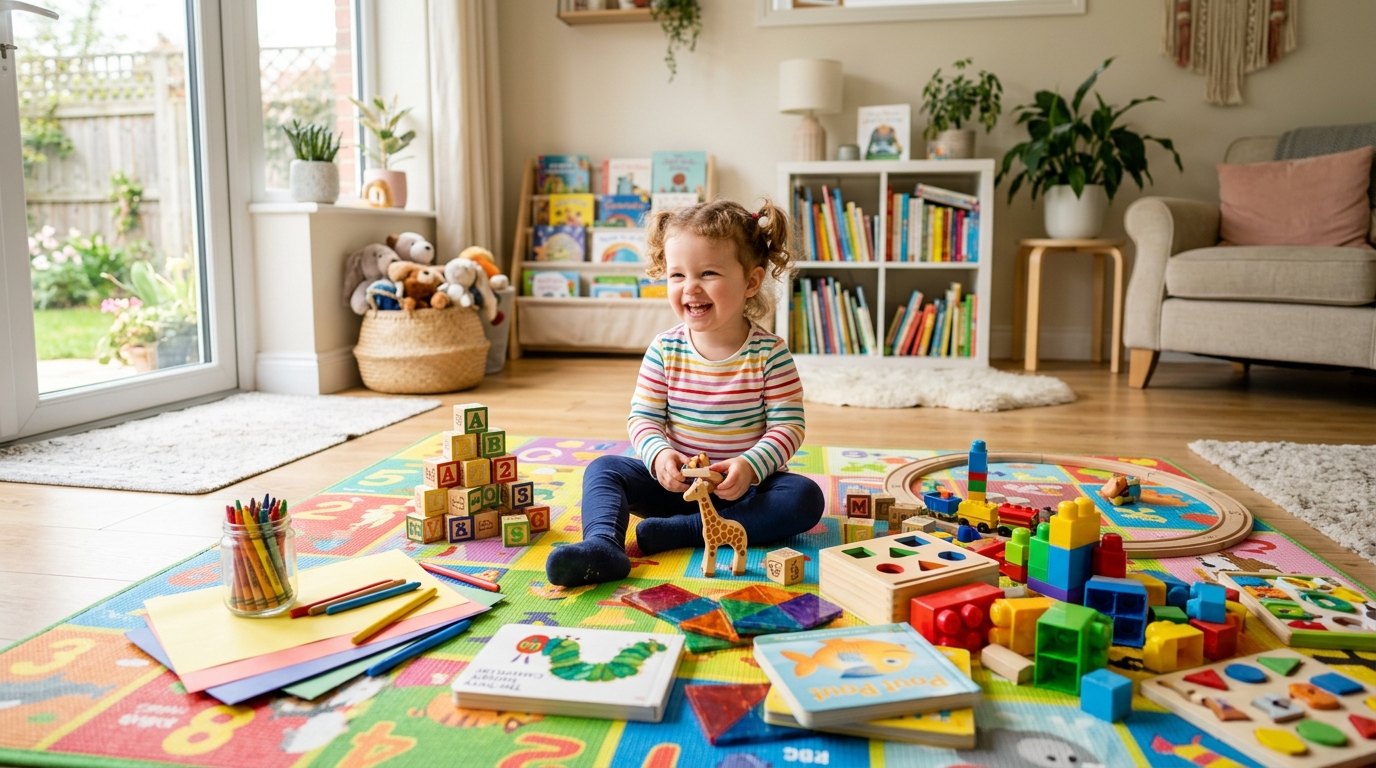
Finding the right toddler activities at home is one of the most rewarding and sometimes challenging aspects of early parenthood. Toddlers between the ages of one and three are at a critical stage of cognitive, physical, emotional, and social development — and the activities they engage in at home play a profound role in shaping their growth during these formative years. Whether you are a stay-at-home parent looking for fresh inspiration, a working parent maximising quality time on weekends, or a caregiver seeking structured play ideas, this complete guide to toddler activities at home gives you everything you need to keep your little one learning, laughing, and thriving in 2026.
Why Toddler Activities at Home Matter More Than You Think
The home environment is a toddler’s first and most important classroom. Research in early childhood development consistently shows that purposeful play during the toddler years builds the neural pathways that support language acquisition, problem-solving, emotional regulation, creativity, and social skills throughout life.
Toddler activities at home do not need to be elaborate, expensive, or time-consuming to be effective. In fact, the simplest activities — pouring water, sorting objects by colour, scribbling with crayons — often provide the richest developmental benefits because they engage multiple senses and allow toddlers to explore cause and effect at their own pace.
The benefits of intentional toddler activities at home include:
- Stronger language development through narrated play and story-based activities
- Improved fine motor skills through crafts, puzzles, and manipulative play
- Enhanced gross motor development through movement and physical play
- Greater emotional intelligence through role play and social scenarios
- Longer attention spans built through focused, engaging activities
- Stronger parent-child bonding through shared play experiences
Sensory Toddler Activities at Home
Sensory play is among the most developmentally powerful categories of toddler activities at home. It stimulates the senses, builds neural connections, and provides a calming, focused experience for toddlers who are still learning to regulate their emotions and energy levels.
Water play — Fill a shallow bin or the kitchen sink with water and provide cups, spoons, and small toys for pouring, splashing, and exploring. Add a few drops of food colouring for extra visual excitement. Water play builds mathematical thinking through concepts of volume and measurement while providing sensory satisfaction.
Sensory bins — Fill a large container with dried rice, pasta, beans, kinetic sand, or shredded paper and hide small toys or objects inside for your toddler to find. Sensory bins provide extended independent play and develop fine motor skills, concentration, and tactile awareness simultaneously.
Playdough and clay — Homemade playdough made from flour, salt, water, and food colouring is inexpensive, non-toxic, and endlessly entertaining. Squishing, rolling, cutting, and shaping playdough builds hand strength and fine motor control that directly supports future writing skills.
Finger painting — Washable finger paints on large paper sheets allow toddlers to explore colour mixing, cause and effect, and creative expression in the most direct and satisfying way possible. Embrace the mess — it is worth every bit of clean-up time.
Ice play — Freeze small toys, flowers, or coloured water in ice blocks and let your toddler explore melting with warm water, salt, or their hands. This simple activity introduces basic science concepts while providing fascinating sensory stimulation.
Creative and Art Toddler Activities at Home
Creative activities build imagination, self-expression, and confidence in toddlers while developing the fine motor skills they will need for writing, drawing, and detailed tasks as they grow:
- Sticker art — Provide stickers and paper for toddlers to create their own sticker collages. Peeling stickers builds fine motor control and the creative possibilities are endless
- Collage making — Cut up old magazines, fabric scraps, and tissue paper for gluing onto cardboard. Collage activities build creativity and introduce concepts of texture, colour, and composition
- Nature printing — Dip leaves, flowers, and textured objects in paint and press them onto paper to create beautiful natural prints that also introduce concepts from the natural world
- Chalk drawing — Outdoor chalk drawing on driveways and pavements combines creativity with physical movement and is completely washable, making it one of the most parent-friendly toddler activities at home
- Homemade stamps — Cut sponges, vegetables like potatoes and celery, or foam sheets into shapes for dipping in paint and stamping onto paper. Stamp art introduces shape recognition alongside creative expression
- Threading and lacing — Large wooden beads or pasta shapes threaded onto shoelaces or pipe cleaners build concentration and fine motor precision in a satisfying, hands-on way
Educational Toddler Activities at Home
Learning disguised as play is the most effective educational approach for toddlers. These activities build foundational academic skills while feeling entirely like fun:
Colour sorting — Gather objects of different colours — blocks, balls, socks, or craft pompoms — and sort them into matching coloured containers or circles drawn on paper. Colour sorting builds categorisation skills and colour recognition simultaneously.
Shape hunts — Walk around the house identifying shapes in everyday objects — the circular clock, the rectangular door, the square window. Shape hunts build geometric awareness and observational skills while making learning feel like an adventure.
Counting games — Count everything — stairs, biscuits, fingers, toys — throughout the day. Simple counting games during routine activities build number sense more effectively than formal instruction at this age.
Puzzle play — Age-appropriate wooden puzzles with large pieces build spatial reasoning, problem-solving, and persistence. Start with simple two to four piece puzzles and gradually increase complexity as your toddler’s skills develop.
Story time with props — Read picture books aloud using props, puppets, or soft toys to act out the story. Interactive story time builds vocabulary, comprehension, listening skills, and a lifelong love of reading.
Matching games — Create simple matching games using pairs of pictures, household objects, or playing cards. Matching activities build memory, concentration, and the foundational logic skills that support future mathematical thinking.
Physical and Outdoor Toddler Activities at Home
Physical movement is essential for toddler development and energy management. These active toddler activities at home support gross motor development, coordination, and healthy sleep patterns:
- Obstacle courses — Use cushions, pillows, tunnels made from blankets, and taped floor lines to create simple indoor obstacle courses that challenge balance, coordination, and physical confidence
- Dance parties — Put on upbeat music and dance together. Dancing builds rhythm, coordination, and body awareness while providing an excellent energy outlet on days when outdoor play is not possible
- Balloon play — Balloons are endlessly fascinating for toddlers and safely encourage jumping, reaching, and coordination development. Supervised balloon play provides excellent gross motor stimulation indoors
- Bubble chasing — Blowing bubbles outdoors and encouraging your toddler to chase and pop them combines physical activity with visual tracking and pure joy in equal measure
- Garden exploration — Even a small garden or balcony provides rich opportunities for toddlers to explore nature, dig in soil, water plants, observe insects, and develop a connection with the natural world
For parents looking to build strong daily routines that support both toddler development and family wellbeing, our guide on simple morning routine tips for productivity offers practical advice that helps the whole family start each day with intention and energy.
Frequently Asked Questions (FAQ)
Q1: How much time should toddlers spend on activities at home each day? Early childhood experts generally recommend a balance of structured activities, free play, outdoor time, and rest throughout the day. Most toddlers benefit from two to three focused activity sessions of 15 to 30 minutes each, interspersed with free play and physical movement. Avoid over-scheduling — toddlers learn as much from unstructured exploration as they do from planned activities.
Q2: What are the best toddler activities at home for rainy days? Sensory bins, playdough, finger painting, indoor obstacle courses, dance parties, puzzle play, and interactive story time are all excellent rainy day options that can be set up quickly with materials most families already have at home. Keeping a dedicated rainy day activity box stocked with craft supplies, sensory materials, and simple games means you are always prepared.
Q3: How do I keep my toddler engaged in activities without constant entertainment from me? The key is setting up activities that are self-directed and open-ended enough to sustain independent exploration. Sensory bins, playdough, building blocks, and art supplies all allow toddlers to play independently for extended periods. Rotating toys and activities regularly maintains novelty and interest without requiring new purchases.
Q4: Are screen-based activities appropriate for toddlers at home? Most paediatric health organisations recommend limiting screen time for children under two to video calls only, and keeping screen time for two to three year olds to one hour or less of high-quality educational content per day. Screen time should never replace active play, creative activities, or face-to-face interaction, which provide developmental benefits that screens cannot replicate.
Q5: How can toddler activities at home support language development? Narrating activities as you do them, asking open-ended questions, reading aloud daily, singing songs and nursery rhymes, and engaging in imaginative role play are the most powerful ways to support language development through home activities. The quantity and quality of words a toddler hears during play directly influences their vocabulary development, so talking continuously during shared activities is one of the most valuable things a parent can do.
Toddler activities at home do not require expensive equipment, elaborate preparation, or Pinterest-perfect presentation to make a profound difference in your child’s development. What matters most is your presence, your enthusiasm, and your willingness to get on the floor and explore the world through your toddler’s endlessly curious, endlessly wonderful eyes.
Choose a few activities from this guide, gather your materials, and enjoy the irreplaceable magic of learning and playing together with your toddler today.
For more parenting tips, family lifestyle guides, and early childhood inspiration, visit Alpha Magazine your trusted source for staying inspired and informed in 2026.